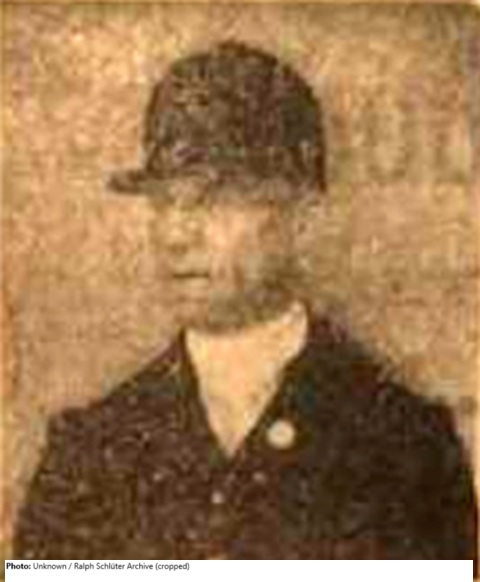
| Roles | Non-starter |
|---|---|
| Sex | Male |
| Full name | Carl•Jobst |
| Used name | Carl•Jobst |
| Born | 7 November 1878 |
| NOC |  Germany Germany |
Carl Jobst was a cavalry officer and riding instructor. He began his military career as a lieutenant in the 25th (1st Württemberg) Dragoon Regiment “Queen Olga” in Ludwigsburg near Stuttgart. Subsequently, he was seconded to the Cavalry School in Hanover for three years. At the beginning of World War I, he served in his dragoon regiment, which was integrated into the infantry in 1918. Jobst then became the last commander of this regiment. In the final phase of the war, he was seriously wounded. His highest rank was major. He was awarded the Iron Cross 1st class, and the Württemberg Military Merit Cross.
After World War I, Jobst worked as a military riding instructor in Stuttgart, Ludwigsburg and other places. In Mannheim, he took on responsibility for equestrian training at the Mannheim Riding Club, a role he fulfilled for about 15 years. Here, he focussed on the training of young people. At the 1912 Olympics, Jobst was registered for the dressage event but did not compete. As a well-known school and tournament rider, he became a member of the German Tournament Judges’ Association. At the 1936 Olympic Games, he was assistant of the French jury member, General Albert Decarpentry. Even his 60s, Jobst still took part in senior tournaments and gave dressage demonstrations, sometimes together with his wife.
| Games | Discipline (Sport) / Event | NOC / Team | Pos | Medal | As | |
|---|---|---|---|---|---|---|
| 1912 Summer Olympics | Equestrian Dressage (Equestrian) | GER |
Carl Jobst | |||
| Individual, Open (Olympic) |