| Roles | Competed in Olympic Games |
|---|---|
| Sex | Male |
| Full name | Harald Kurt•Knut-Ekwall |
| Used name | Harald•Ekwall |
| Born | 14 December 1873 in Leipzig, Sachsen (GER) |
| Died | 13 January 1962 (aged 88 years 30 days) in La Cisterna, Santiago Metropolitan (CHI) |
| NOC |  Chile Chile |
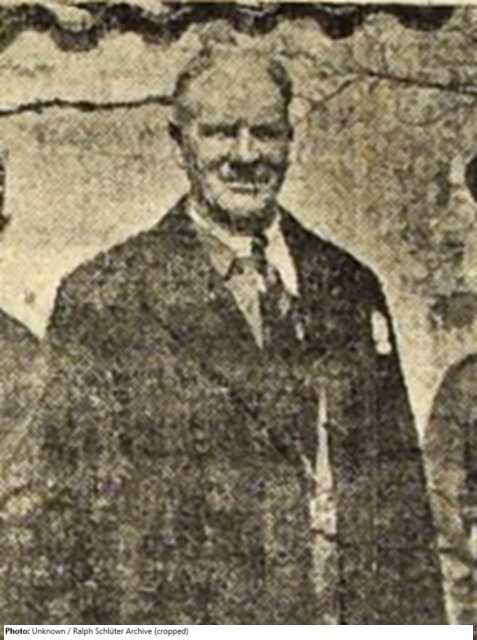
Harald Ekwall was the son of the well-known Swedish painter and woodcut artist Knut Ekwall (1843-1912). Harald was born in Germany, where his father studied art. His aunt and several of his siblings were also artists. It came as no surprise that Harald Ekwall also started painting. Like many of his siblings, he also played a string instrument, in his case the cello. They played publicly in the 1890s as the Ekwallska Kvintetten.
In 1900 Harald emigrated to Chile and settled in Santiago along with his brother Erik and sister Anna. Ekwall, a German citizen, later acquired Chilean citizenship, became a member of the 5th Fire Company of Santiago, and joined the National Target Shooting Club. For many years he was engaged in the shooting club Cóndor de Chile. Ekwall returned to Sweden for some time in 1912, probably after the death of his father as a victim of a fire that destroyed his house. Months later, Ekwall represented Chile at the Stockholm Olympic Games in four shooting events.
As a painter, his preference was for maritime, landscape, and equestrian motifs in oil. He often signed his paintings “Harald Knut-Ekwall”, and his time in Chile from 1900-12 was considered his most prolific time as an artist.
| Games | Discipline (Sport) / Event | NOC / Team | Pos | Medal | As | |
|---|---|---|---|---|---|---|
| 1912 Summer Olympics | Shooting | CHI |
Harald Ekwall | |||
| Free Pistol, Men (Olympic) | 23 | |||||
| Dueling Pistol, Men (Olympic) | 38 | |||||
| Military Rifle, Three Positions, Men (Olympic) | 43 | |||||
| Military Rifle, Men (Olympic) | 67 |
Wrong YOD 1935; he was still alive in 1953 according to newspaper clip in La Nacion.