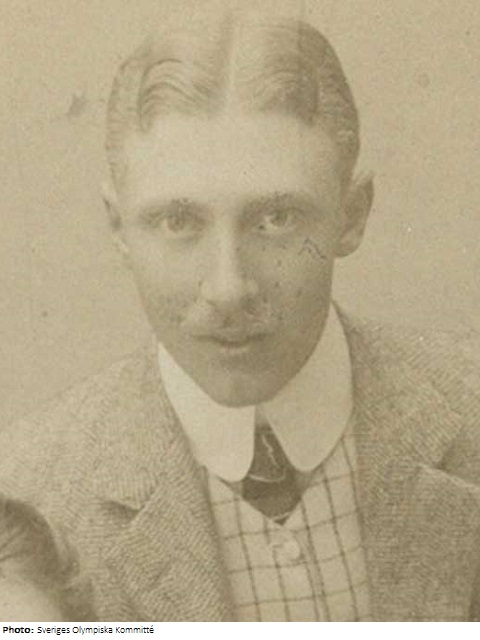
| Roles | Competed in Olympic Games |
|---|---|
| Sex | Male |
| Full name | Erik Hjalmar•Frisell |
| Used name | Hjalmar•Frisell |
| Born | 27 August 1880 in Stömne bruk, Arvika, Värmland (SWE) |
| Died | 27 May 1967 (aged 86 years 9 months) in Stockholm, Stockholm (SWE) |
| Affiliations | Stockholms SkarpSF / SSK, Stockholm (SWE) |
| NOC |  Sweden Sweden |
Erik Frisell came from a family of ironworks owners. In Uppsala he was trained as an artillery officer but around 1910 transferred to the reserve as a captain. At the 1912 Olympics in Stockholm his best result was a fourth place in the trap shooting team event. In 1918 he became commander of the Swedish Brigade, a volunteer unit as part of the Whites’ army during the Finnish Civil War, and was stationed in Oulu in the northern part of Finland. When the brigade suffered heavy losses in operations near Tampere he was discharged from the command.
Frisell left Sweden and worked in Kenya for 10 years poling out railways for the British army. After his return to his home country, he wrote two autobiographical books about his years in Africa (Seven years in a tent among whites and blacks: social life, work and adventure in Kenya and Living dangerously in Africa). He was married twice, divorced in his first marriage, and had seven children including two from his first marriage.
| Games | Discipline (Sport) / Event | NOC / Team | Pos | Medal | As | |
|---|---|---|---|---|---|---|
| 1912 Summer Olympics | Shooting | SWE |
Hjalmar Frisell | |||
| Trap, Open (Olympic) | 31 | |||||
| Running Target, Double Shot, Men (Olympic) | 12 | |||||
| Trap, Team, Men (Olympic) | Sweden | 4 |