| Roles | Competed in Olympic Games |
|---|---|
| Sex | Male |
| Full name | Andreas•von Flotow |
| Used name | Andreas•von Flotow |
| Born | 6 June 1876 in Kogel, Mecklenburg-Vorpommern (GER) |
| Died | 17 January 1950 (aged 73 years 7 months 11 days) in Murnau am Staffelsee, Bayern (GER) |
| NOC |  Germany Germany |
Andreas von Flotow was an active officer in the Royal Prussian Army and a dressage rider. His father owned several estates in Mecklenburg-West Pomerania. Andreas served as a lieutenant in the 1st Grand Ducal Mecklenburg Dragoon Regiment No. 17 before he was transferred to the King’s Uhlan Regiment (1st Hanoverian) No. 13 in Hanover. He came in 11th in individual dressage at the 1912 Stockholm Olympics on his horse Senta.
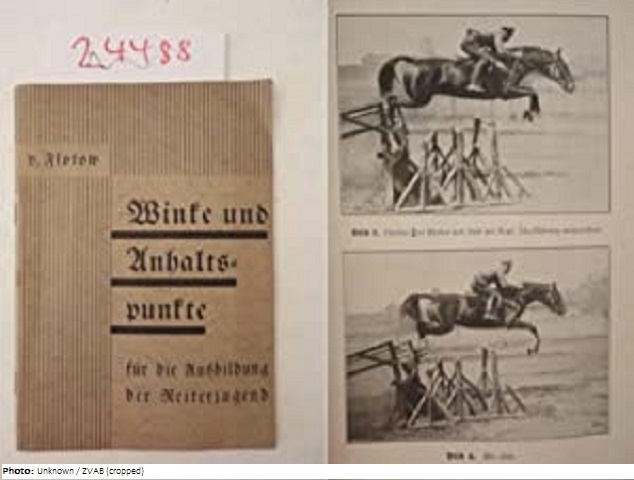
During the World War I, von Flotow became prominent testifying against Allied claims of German looting in France. After the war he joined the new Reichswehr as a captain and was promoted to captain in 1920. From 1922-26 and 1934-40, he was employed as a riding teacher at the Cavalry School, eventually in the rank of colonel. His students included Marten von Barnekow and Hermann von Nagel. Andreas von Flotow also wrote a textbook Winke und Anhaltspunkte für die Ausbildung der Reiterjugend (Hints and clues for the training of young riders).
In 1939, he moved to Murnau in Bavaria to live with his sister. He remained unmarried and childless. Andreas von Flotow’s nephew of the same name was active in Nazi organisations from 1931 to 1932 and, after breaking with the National Socialists at the turn of the year, was killed in a political assassination by his own men in 1933.
| Games | Discipline (Sport) / Event | NOC / Team | Pos | Medal | As | |
|---|---|---|---|---|---|---|
| 1912 Summer Olympics | Equestrian Dressage (Equestrian) | GER |
Andreas von Flotow | |||
| Individual, Open (Olympic) | Senta | 11 |