| Roles | Competed in Olympic Games |
|---|---|
| Sex | Male |
| Full name | Carl Bror Emil "Kalle"•Aejmelaeus (-Äimä) |
| Used name | Kalle•Aejmelaeus |
| Born | 20 May 1882 in Porvoo, Uusimaa (FIN) |
| Died | 13 July 1935 (aged 53 years 1 month 24 days) in Kiel, Schleswig-Holstein (GER) |
| Measurements | 169 cm |
| NOC |  Russian Federation Russian Federation |
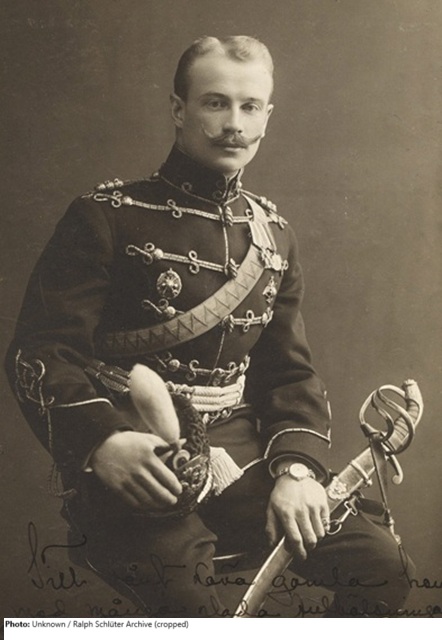
At the 1912 Olympic Games in Stockholm Kalle Aejmelaeus took part in the modern pentathlon as a member of the Russian team. At that time, only officers were allowed to participate and Finland did not have its own Army until independence in 1918. Aejmelaeus, however, gave up the competition after two disciplines.
In 1901, Aejmelaeus graduated from the Finnish Real Lyceum in Helsinki and immediately left Finland and volunteered to fight for the Boers in the South African War. He spent the years 1902-04 in Argentina and Brazil and claimed to have been involved in the suppression of revolutions in South America. In 1904, Aejmelaeus joined the US Army and – after military training – served as a sergeant in San Antonio, Texas. He left the military in 1906 and worked as a cowboy before returning to Europe.
There, Aejmelaeus underwent military training in St. Petersburg at the Emperor Nikolai Cavalry School from 1906–08. Stationed with the 9. Hussar Regiment near Kyiv, he continued to travel to various countries and competed in a multitude of sports nationally and internationally. For instance, he won the sabre event at the First Russian Olympiad in Kyiv. From 1912, he worked as a sports and gymnastics instructor at the Nikolai Riding School and lectured at the main gymnastics and fencing school. In 1914, he studied at the Imperial Archaeological Institute in St. Petersburg. From 1916-18 he took part in World War I as an officer in a Cossack cavalry regiment on the border with Romania.
After Finland gained independence, Aejmelaeus joined the Finnish Army as a major. From 1919-25, he was head of the military affairs office and first aide-de-camp to Finland’s first president, Kaarlo Juho Ståhlberg, and was temporarily stationed at the London embassy. During this time, Aejmelaeus was made Commander of the British Empire, Commander of the Order of the Crown of Italy, as well as Commander of the Order of the White Rose of Finland and was awarded the Estonian Cross of Freedom. He then served as the Finnish military attaché in Moskva (Moscow) (1926-28) and in Den Haag (The Hague) (1929-31). Back in Finland, Aejmelaeus was then appointed district commander of the Tampere Eastern Military District (1932-33) and finally, from 1933, commander of Viipuri (now Vyborg).
A keen sportsman, he published an illustrated ski guide in Russian in 1912 entitled “Skiing for Military Purposes”. At the 1920 Antwerpen Olympics, Aejmelaeus acted as a referee and a representative of the military. He co-founded the Helsinki Fencing Club in 1923, was its chairman until 1925 and became an honorary member in 1926. Aejmelaeus was also chairman of the Equestrian Federation and a member of the Finnish Olympic Committee and the Executive Committee of the Nordic Games. Besides sports, he was also a Freemason and Rotarian and a founding member of the Finnish Archaeological Society.
Aejmelaeus added the Finnish Äimä to his name in 1920. In 1933, he married Astrid Ingeborg Hagström. Two years later, he died of a brain haemorrhage in the German city of Kiel.
| Games | Discipline (Sport) / Event | NOC / Team | Pos | Medal | As | |
|---|---|---|---|---|---|---|
| 1912 Summer Olympics | Modern Pentathlon | RUS |
Kalle Aejmelaeus | |||
| Individual, Men (Olympic) |